

Pokémon numbering system

There are several Pokémon numbering systems. They include the National Pokédex with all known Pokémon, several regional Pokédexes, as well as other number systems in spin-off games.
In the core series games
- Main articles: National Pokédex and regional Pokédex
In Generations I-VI, the National Pokédex has been available as a Pokédex mode in all core series games from Generation I to VI, and in Pokémon Brilliant Diamond and Shining Pearl. From Generation VII onwards, the National Pokédex is not available in the core series games. By contrast, there are several regional Pokédexes, each including a certain number of Pokémon in different numerical orders, varying by region.
In the side series games
In the Pokémon Stadium series, Pokémon Bank and Pokémon HOME, the Pokédex is able to sort Pokémon by the National Pokédex number.
In Pokémon Stadium 2, the New Pokédex order is used by default but its numbers are not shown in-game; the National Pokédex number of each Pokémon is displayed instead.
In the spin-off games
Pokémon Ranger series

|
This section is incomplete. Please feel free to edit this section to add missing information and complete it. Reason: Check how many unique Pokémon species there are in Guardian signs |
In the Pokémon Ranger series, each the regional Browser lists Pokémon using their own numbering systems.
- In Pokémon Ranger, the Fiore Browser lists 213 Pokémon from Generations I-III, numbered from R-001 to R-213.
- In Pokémon Ranger: Shadows of Almia, the Almia Browser lists 270 Pokémon from Generations I-IV. Specifically, the regular list includes 267 numbered Pokémon numbered from R-001 to R-267, and there are also 3 unnumbered Pokémon from Special Missions.
- In Pokémon Ranger: Guardian Signs, the Oblivia Browser lists 307 Pokémon in the present, numbered from R-001 to R-301, and S-001 to S-006. It also lists 223 Pokémon in the past, numbered from N-001 to N-222, with the addition of Deoxys as X-001. The present and past versions include Pokémon from Generations I-IV. Several Pokémon are listed in both versions: for instance, Bulbasaur is both R-014 and N-004.
Pokémon Conquest
In Pokémon Conquest, the Gallery displays 200 Pokémon from Generations I-V, numbered from #001 Eevee to #200 Rayquaza.
New Pokémon Snap
In New Pokémon Snap, the Photodex originally listed 214 Pokémon from Generations I-VIII, later expanded to 234 Pokémon in the 2.0.0 update. They are listed from #001 Vivillon to #234 Zeraora.
PokéPark series
In PokéPark Wii: Pikachu's Adventure, the Friend List contains 193 Generation I-IV Pokémon from P-001 Chatot to P-193 Deoxys. In PokéPark 2: Wonders Beyond, the Friend List contains 194 Generation I-V Pokémon from #001 Piplup to #194 Zekrom.
Pokémon Duel
In Pokémon Duel, the Library lists 598 entries, including Pokémon species, alternate forms, and Mega Evolutions, but several numbers are skipped. They are numbered from #001 Dialga to #648 Necrozma (Dawn Wings). This list contains 468 Pokémon species from Generation I-VII.
Pokémon Tetris
In Pokémon Tetris, the Pokédex feature lists the Generation I-II Pokémon by National Pokédex number.
Pokémon Puzzle Collection series
In Pokémon Puzzle Collection and Pokémon Puzzle Collection Vol. 2, the Mini Dex lists all the Pokémon that appear in the puzzle games. Specifically, they are 80 Pokémon in the first game, or 96 Pokémon in the second game, from Generations I and II. The Mini Dex also displays each Pokémon's National Pokédex number.
-
 Mini Dex in the first game
-
 Mini Dex in the second game


Pokémon Puzzle Challenge
In Pokémon Puzzle Challenge, the PKMN Data lists 26 Generation I-II Pokémon from #00 Chikorita to #25 Dragonite. The first 13 Pokémon are available to the player and the other 13 Pokémon are owned exclusively by non-player characters. However, the PKMN Data screen only displays a Pokémon's National Pokédex number. A Pokémn's PKMN Data number is found in the Options screen instead.
-
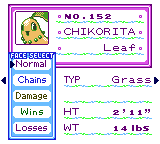
-
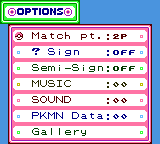 Options screen
PKMN Data: 00 (Chikorita)


Pokémon Pinball series
In Pokémon Pinball, the Pokédex lists all 151 Pokémon in the Kanto Pokédex order. In Pokémon Pinball: Ruby & Sapphire, the Pokédex lists 205 Pokémon: specifically, 201 are Generation III Hoenn Pokédex, numbered from #001 Treecko to #201 Jirachi, and 4 unnumbered Pokémon not available in the Hoenn Pokédex.
Perdue series
In Pokémon Team Rocket Blast Off, Pokémon Poké Ball Launcher, and Pokémon Seek & Find, the Pokédex feature lists the Generation I-III Pokémon by National Pokédex number.
In animation

Pokémon animated series
Starting from Pokémon Journeys: The Series, Pokédexes based on Rotom Phones have displayed the scanned Pokémon's National Pokédex number when playing its Pokédex entry.
In the manga

(Hoenn Pokédex #007)
Pokémon Adventures
In Pokémon Adventures, the earlier arcs set in Kanto used the original version of the Kanto Pokédex, which shared the same Pokémon numbers as the National Pokédex. Exceptionally, the Gold, Silver & Crystal arc still used National Pokédex instead of New Pokédex numbers. The Ruby & Sapphire arc was the first to use regional Pokédex numbers that are different from the National Pokédex numbers, specifically the Hoenn Pokédex.
In merchandise

American Greetings
In a Pokémon sticker set by American Greetings, the New Pokédex numbers from Pokémon Gold, Silver, and Crystal are used.
Super Card
In the Brazilian Super Card, there are 50 Pokémon from Generation I with a unique number system, from #1 Bulbasaur to #50 Mewtwo.
Jo-Kén-Pokémon
In the Brazilian Jo-Kén-Pokémon, there are 60 Pokémon from Generation I-II with a unique number system, from #1 Charizard to #60 Ho-Oh.
Related articles

|
This game mechanic article is part of Project Games, a Bulbapedia project that aims to write comprehensive articles on the Pokémon games. |