

Root Fossil
| ||||||||||||||||||||
| ||||||||||||||||||||
| ||||||||||||||||||||


The Root Fossil (Japanese: ねっこのカセキ Root Fossil) is a fossil introduced in Generation III that can be regenerated into Lileep. It is the counterpart of the Claw Fossil.
In the core series games
Price
|
Effect
If brought to the one of the following locations, the Root Fossil can be regenerated into a Lileep.
Generation III
In the Generation III games, the Root Fossil is a Key Item.
In Pokémon FireRed and LeafGreen, the Root Fossil (as well as the Claw Fossil) is found in the game data, but it is not legitimately obtainable and has no effect. The player is unable to regenerate this fossil in the Cinnabar Lab.
Generation IV onward
From Generation IV onward, the Root Fossil is no longer a Key Item, and is a normal item. Therefore, multiples of them can be obtained, they can be held, and sent to other players via trading.
Description
|
Acquisition
|
Gallery
Sprites

|

|

|
| Overworld sprite from Ruby, Sapphire, and Emerald |
Underground sprite from Diamond, Pearl, and Platinum |
Grand Underground sprite from Brilliant Diamond and Shining Pearl |
In animation

Pokémon the Series
Pokémon the Series: Ruby and Sapphire
While the fossil itself has not yet physically appeared in the animated series, an image of a Root Fossil was seen in Where's Armaldo?, when Professor Proctor explained Ash and his friends how he had restored several Lileep and Anorith back to life from Root and Claw Fossils.
In the TCG

- Main article: Root Fossil (EX Sandstorm 92)
The Root Fossil was introduced as a Trainer card in the Pokémon Trading Card Game in the EX Sandstorm expansion, first released in the Japanese Miracle of the Desert expansion. Although it is a Trainer card, it is played as if it were a Colorless-type Basic Pokémon. However, Root Fossil can't be affected by any Special Conditions, can't retreat, and the player may choose to discard it at any time during their turn. Additionally, it allows the player to remove one damage counter from Root Fossil between turns. It can evolve into Lileep that evolve from a Root Fossil. During the EX Series, Knocking Out a Root Fossil was not rewarded with a Prize card (it still had to be discarded). This changed in the Diamond & Pearl Series with its reprint in the Legends Awakened expansion, to match the Fossil cards released in the previous expansion.
During the Black & White Series, the Plasma Blast expansion included the Item card Root Fossil Lileep. It allows players to look at the bottom seven cards of their deck, reveal a Lileep they find there, and put it onto their Bench. The other six cards are then shuffled back into the deck.
Root Fossils are also featured on Unidentified Fossil cards. These cards are played as if they were Basic Pokémon and can evolve into Lileep.
- Main article: Antique Root Fossil (Stellar Crown 130)
The Scarlet & Violet Series saw the release of Antique Root Fossil in the Stellar Crown expansion, first released in the Japanese Stellar Miracle expansion. This card is like the previously released Root Fossil card, but with a different Ability that makes it so that if this card is in the Active Spot, the opponent's Active Pokémon's attacks cost  more.
more.
Merchandise
The Root Fossil has been featured in several officially licensed figures and goods.
-

-
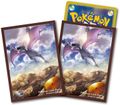 Aerodactyl Sleeves
 -
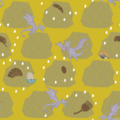 Aerodactyl Pokémon Shirts pattern
 -
 WCS2019 Fossil Pokémon art print


Trivia
- The symbol for the EX Sandstorm expansion
 resembles the Claw and Root Fossils.

In other languages
| Language | Title | |
|---|---|---|
| Japanese | ねっこのカセキ Nekko no Kaseki | |
| Chinese | Cantonese | 根狀化石 Gānjohng Fasehk |
| Mandarin | 根狀化石 Gēnzhuàng Huàshí * 樹根化石 Shùgēn Huàshí * | |
| Finnish | Juurifossiili | |
| French | Fossile RacineVI+ Foss. RacineIII–V | |
| German | Wurzelfossil | |
| Indonesian | Fosil Akar | |
| Italian | Radifossile Radice FossileTCG, III–IV | |
| Korean | 뿌리화석 Ppuri Hwaseok | |
| Brazilian Portuguese | Fóssil Raiz | |
| Russian | Ископаемый Корень Iskopayemyy Koren' | |
| Spanish | Fósil Raíz | |
| Thai | ฟอสซิลราก Fossil Rak | |
| Vietnamese | Hóa thạch rễ cây | |
Related articles


|
This item article is part of Project ItemDex, a Bulbapedia project that aims to write comprehensive articles on all items. |