

Game Link Cable
- If you were looking for the item, see Mystery Dungeon evolutionary items → Link Cable.

|
It has been suggested that this article be moved to Game Link cable. Please discuss whether or not to move it on its talk page. |

A Game Link cable (Japanese: 通信ケーブル link cable) is a cable used to transfer data between two Nintendo consoles, such as the Game Boy, Game Boy Color, and Game Boy Advance. They can also connect Game Boy consoles with other devices, including the Game Boy Camera and Game Boy Printer.
The Game Link cable was part of Satoshi Tajiri's original concept for the Pokémon games. He said early on that he imagined his creatures crawling through the cable from one game to another. With technological developments, including wireless technology, Game Link cables have become obsolete on newer consoles.
Models
There are four generations of Game Link Cable, with three different plug types and two different protocols. Adapters exist to convert between different plug types, but not between protocols.
Game Boy Game Link cable

The Game Boy Game Link cable (Japanese: ゲームボーイ専用通信ケーブル Link Cable for Game Boy) is the first generation of link cable (with product code DMG-04). It was released alongside the original Game Boy, which is the only system it is natively compatible with.
One minor revision (DMG-04A) was released, which has an additional module on one end of the cable.
-
 Japanese box for Game Boy Game Link cable (DMG-04)
 -
 Japanese box for Game Boy Game Link cable (DMG-04A)
 -
 North American blister pack for Game Boy Game Link cable
 -
 European box for Game Boy Game Link cable


Game Boy pocket Link cable adapter

The Game Boy pocket Link cable adapter (Japanese: ゲームボーイポケット専用通信コネクタ Link Connector for Game Boy Pocket) was released (product code MGB-004) to convert a male Game Boy plug to a male Game Boy Pocket/Color plug.
In Japan, after the release of the Game Boy Color, it was rebranded as being for the Game Boy Series rather than specifically the Game Boy Pocket (ゲームボーイシリーズ専用通信コネクタ Link Connector for Game Boy Series)
This is necessary to connect a Game Boy to other Game Boy series systems as well as the Game Boy Printer.
-
 English-language box for Game Boy pocket Link cable adapter
 -
 Japanese box for Game Boy pocket Link cable adapter
 -
 Japanese box for Game Boy Series Link cable adapter


Four Player Adapter

The Four Player Adapter (Japanese: 4人用アダプタ 4 Player Adapter) was a separate accessory that allows up to four Game Boys to link to each other in supported games; however, no Pokémon Game Boy games support more than two players. In Japan it was sold individually, while in North America it was bundled with F1 Race (one of the few games that supports it).
The Adapter features a single Game Boy Game Link cable plug connected to a hub with three Game Boy Game Link cable ports—to play with four players, three additional Game Link cables are required. While Player 1 must use an original Game Boy (as Player 1 slot has a Game Boy plug), the other players can use a Game Boy Link cable Adapter and a Game Boy Pocket/Color Game Link cable to use other Game Boy systems.
Game Boy Pocket/Color Game Link cable

The second generation of link cable is compatible with the Game Boy Pocket, Game Boy Light, Game Boy Color, Super Game Boy 2, and Game Boy Printer. This cable features a smaller plug than the first generation cable, meaning that an adapter is required in order to use these newer cables with the original Game Boy.
The first major iteration of this cable is the Game Boy Pocket Game Link cable (Japanese: ゲームボーイポケット専用通信ケーブル Game Link cable for Game Boy Pocket), released with product code MGB-008, which is a clear cable with cream connectors. This cable had two minor revisions: MGB-008A, which adds a module to one of the ends of the cable; and MGB-008B, which adds the same module to both ends of the cable.
The second major iteration of this cable is the Game Boy Color Game Link cable (Japanese: ゲームボーイシリーズ専用通信ケーブル Game Link cable for Game Boy Series), released with product code CGB-003, which is a functionally identical black cable. This cable has modules on both ends of the cable, like MGB-008B.
This same plug shape is also used on the Game Boy Advance family, but this cable is not compatible with Game Boy Advance games. However, it is compatible with Game Boy and Game Boy Color games played on a Game Boy Advance family system—in fact, it is required, as those games are not compatible with the Game Boy Advance Game Link cable.
-
 Game Boy Color Game Link cable
 -
 Japanese box for Game Boy Pocket Game Link cable (MGB-008)
 -
 Japanese box for Game Boy Pocket Game Link cable (MGB-008A)
 -
 Japanese box for Game Boy Pocket Game Link cable (MGB-008B)
 -
 Japanese box for Game Boy Color Game Link cable (CGB-003)


Universal Game Link cable

Several universal Game Link cables were released, which featured one end with a Game Boy Pocket plug, and the other end that could function as either a Game Boy plug or a Game Boy Pocket plug. This was implemented in two different ways.
The universal Game Link cable available for individual sale is a Game Boy Color cable (CGB-003), but has an optional adapter (DMG-14) attached to one end that allow that end of the cable to be converted to a Game Boy plug.
In North America and Europe, the Game Boy Printer was bundled with a universal link cable (MGB-10), that is different to the one available for individual sale. (In Japan, the Game Boy Printer was not bundled with a Game Link cable at all.) This cable has a Game Boy Pocket plug on one end, while the other end splits into both a Game Boy plug and a Game Boy Pocket plug.
-
 North American box for a universal Game Link cable set
 -
 North American blister pack for a universal Game Link cable set
 -
 European box for a universal Game Link cable set


Mobile Game Boy Adapter

- Main article: Mobile Game Boy Adapter
The Mobile Game Boy Adapter is a Japan-exclusive cable that allows a Game Boy Color or Game Boy Advance system to connect to a compatible mobile phone, which can then be used to connect a compatible game to the internet. The Game Boy end uses the same plug as the Game Boy Color and Game Boy Advance.
The only Pokémon game to support this cable is the Japanese version of Pokémon Crystal.
Game Boy Advance Game Link cable

The Game Boy Advance Game Link cable (Japanese: ゲームボーイアドバンス専用通信ケーブル Link Cable for Game Boy Advance) is the third generation of link cable (with product code AGB-005). It is used for the Game Boy Advance, Game Boy Advance SP, Game Boy Player, and Visteon Dockable Entertainment.
The Game Boy Advance Game Link cable has color-coded plugs, with the purple plug being used for Player 1 and the grey plug being used for Player 2. The cable also has an Interconnect Box, which has a link cable port to allow daisy-chaining cables together in order to support up to four players. On the additional cables, the purple Player 1 end is always plugged into the purple Interconnect Box.[1] Several Pokémon Game Boy Advance games support up to four players at once via Game Link cable, including Pokémon Ruby, Sapphire, Emerald, FireRed, and LeafGreen.
These cables have the same plug as the Game Boy Pocket/Color cable, but are not compatible with those systems. While the Game Boy Advance series of systems can play Game Boy and Game Boy Color games, this cable is usually not compatible with them—those games require the Game Boy Pocket/Color cable to be used even when played on a Game Boy Advance family system. However, by daisy-chaining two of these cables together in a loop so the purple ends go inside each other’s Interconnect Boxes, it is possible to allow Game Boy or Game Boy Color games to communicate using two grey Player 2 plugs.[2]
-
 Japanese box for Game Boy Advance Game Link cable
 -
 North American blister pack for Game Boy Advance Game Link cable
 -
 European and Australian box for Game Boy Advance Game Link cable


Game Boy Advance Wireless Adapter

- Main article: Game Boy Advance Wireless Adapter
The Game Boy Advance Wireless Adapter plugs into the link cable port. It allows supported games to communicate wirelessly, including Pokémon FireRed, LeafGreen, and Emerald. It was bundled with Pokémon FireRed and LeafGreen.
Game Boy micro Game Link cable

The Game Boy micro Game Link cable (Japanese: ゲームボーイミクロ専用通信ケーブル Link Cable for Game Boy micro) is the fourth generation of link cable (with product code OXY-008). It allows connecting two Game Boy micro systems together. It has 8 pins, in contrast to the Game Boy Advance cable's 6 pins.
Like the Game Boy Advance Game Link cable, there is an Interconnect Box in the middle of the cable, allowing multiple of these cables to be daisy-chained to support up to four players.
In Japan, these cables were sold in stores. In North America and Europe, they were only available by ordering them directly from Nintendo, and came in generic packaging.
-
 Japanese box for Game Boy micro Game Link cable

Game Boy micro Converter Connector

The Game Boy micro Converter Connector (Japanese: ゲームボーイミクロ専用通信コネクタ Link Connector for Game Boy micro) was released (product code OXY-009) to convert a male Game Boy micro plug to a male Game Boy Advance plug. This adapter can be used with a Game Boy micro Link cable to connect a Game Boy micro to a Game Boy Advance system.
In Japan, these adapters were sold in stores. In North America and Europe, they were only available by ordering them directly from Nintendo, and came in generic packaging.
-
 Japanese box for the Game Boy micro Game Link cable adapter

Game Boy micro Wireless Adapter

- Main article: Game Boy Advance Wireless Adapter
The regular Game Boy Advance Wireless Adapter (product code OXY-004) is not compatible with the Game Boy micro, so a separate Wireless Adapter was released specifically for this system.
In Japan, these adapters were sold in stores. In North America and Europe, they were only available by ordering them directly from Nintendo, and came in generic packaging.
GameCube Game Boy Advance cable

The Nintendo GameCube Game Boy Advance cable allows a Nintendo GameCube to connect to a Game Boy Advance system.
GameCube games including Pokémon Colosseum, Pokémon XD: Gale of Darkness and Pokémon Box Ruby & Sapphire utilize this cable to connect to a Game Boy Advance system. It can be used to send data from an e-Reader in a Game Boy Advance to a GameCube game. It also can be used to allow a Game Boy Advance system to be used as a controller for the Nintendo GameCube.
Pokémon special editions
Kemco released Pokémon-themed Game Boy Color Game Link cables. One featuring a Pikachu on each connector and a Poké Ball was released in both Europe (with product code KPC10E) and Japan (with product code KPC10J); another cable featuring Togepi on each connector and a Poké Ball was released in Japan only (with product code KTC10J).
In Japan, Kemco also released Game Link cable clips based on the Johto first partner Pokémon. These clips could be attached to the plugs of a Game Boy Color Game Link cable.
In North America, a universal Game Link cable with Pokémon-themed box was released; however, the cable itself is identical to other universal Game Link cables available for individual sale.
In Japan, a Game Boy Advance Game Link cable with Pokémon Ruby and Sapphire-themed box was released; however, the cable itself is identical to other Game Boy Advance Game Link cables.
-
 Kemco Pikachu Game Boy Color Game Link cable
 -
 Kemco Pikachu Game Boy Color Game Link cable European blister pack
 -
 Kemco Pikachu Game Boy Color Game Link cable Japanese blister pack
 -
 Kemco Pikachu Game Boy Color Game Link cable Japanese blister pack
 -
 Kemco Togepi Game Boy Color Game Link cable Japanese blister pack
 -
 Kemco Johto first partner Pokémon Game Link cable clips Japanese blister pack
 -
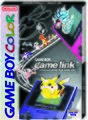 Universal Game Link cable with a Pokémon box
 -
 Pokémon Ruby and Sapphire-themed Game Boy Advance Game Link cable


Games

|
This section is incomplete. Please feel free to edit this section to add missing information and complete it. Reason: Pokémon Puzzle Challenge |
In the core series games

The Game Link Cable is the primary inter-game communication method in the Generation I, II, and III games. From Generation IV onward, the core series games have been released for game systems with built-in wireless communication, so this is used instead of a Game Link Cable.
Generations I and II
In the Generation I and II core series games, the Game Boy Game Link Cable is primarily used for communication between games at the Cable Club in Pokémon Centers. At the Cable Club, players can trade and battle with other games.
Additionally, the Game Link Cable is also used to connect games to the Game Boy Printer. Pokémon Yellow, Gold, Silver, and Crystal are compatible with the Game Boy Printer.
In the Virtual Console releases of these games, the Cable Club uses Nintendo 3DS wireless communications to simulate the Game Link Cable's functionality. The Game Boy Printer functionality is not available in these releases.
Generation III
Pokémon Ruby, Sapphire, Emerald, FireRed, and LeafGreen use the Game Boy Advance Game Link Cable for communication between games at the Pokémon Cable Club in Pokémon Centers. At the Pokémon Cable Club, players can trade and battle with other games. Two players can trade with each other or battle each other in a Single or Double Battle, while four players can battle together in a Multi Battle. In Pokémon Ruby, Sapphire, and Emerald, at the Pokémon Cable Club players can also mix records with up to three other players.
In Pokémon Ruby, Sapphire, and Emerald, the Game Link Cable can also be used at Contest Halls. Up to four players can use the Berry Blender together to make Pokéblocks. Ruby and Sapphire require four human players in order to participate in a contest, Emerald allows contests to be played with 2 or 3 human players.
The Game Link Cable is used to connect the games to the e-Reader to receive data from Pokémon Battle e cards. In Japanese, the e-Reader is compatible with Pokémon Ruby, Sapphire, Emerald, FireRed, and LeafGreen; in English, it is only compatible with Pokémon Ruby and Sapphire; the e-Reader was not released in other languages.
Pokémon FireRed, LeafGreen, and Emerald are also compatible with the Wireless Adapter, which is bundled with Pokémon FireRed and LeafGreen. This adapter allows all of the games' communication features that use the Game Link Cable to be conducted wirelessly instead; some communication features, such as the Union Room and Berry Crush, require the Wireless Adapter. However, because Pokémon Ruby and Sapphire are not compatible with the Wireless Adapter, all communications with these games require the Game Link Cable.
Pokémon Colosseum, Pokémon XD: Gale of Darkness and Pokémon Box Ruby & Sapphire can all connect with Pokémon Ruby, Sapphire, Emerald, FireRed, and LeafGreen via the Nintendo GameCube Game Boy Advance Game Link cable.
Pokémon Ruby, Sapphire, Emerald, FireRed, and LeafGreen can receive event distributions via Game Link cable. In Pokémon Ruby and Sapphire, these distributions are always sent directly to the player's party or received via trade; in Pokémon FireRed, LeafGreen, and Emerald, some distributions can be received via Mystery Gift. The Pokémon Colosseum Bonus Disc and the PAL region (Europe and Australia) version of the GameCube game Pokémon Channel can also send gift Pokémon via Game Boy Advance to GameCube cable.
The Game Link Cable can also be used to send the Berry Program Update to Pokémon Ruby and Sapphire. It can be sent from Pokémon FireRed, LeafGreen, Emerald, Colosseum, XD: Gale of Darkness, Channel (PAL region only), and Pokémon Box Ruby and Sapphire (non-Japanese versions only) as well as the Pokémon Colosseum Bonus Disc.
-
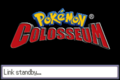 The display for a game that has connected to Pokémon Colosseum
 -
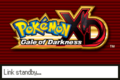 The display for a game that has connected to Pokémon XD: Gale of Darkness
 -
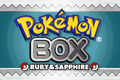 The display for a game that has connected to Pokémon Box Ruby & Sapphire.
 -
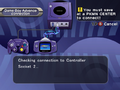 Pokémon Colosseum connecting to the game
 -
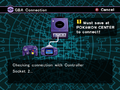 Pokémon XD: Gale of Darkness connecting to the game
 -
 Pokémon Box Ruby & Sapphire connecting to the game


Trading Card Game series
The trading and battling component of spin-off games is not as prevalent as it is in the core series. In Pokémon Trading Card Game and Pokémon Trading Card Game 2: The Invasion of Team GR!, the Game Link cable is required for players to battle each other head-to-head. Players may also transfer cards and deck configurations by using the Game Boy Color's infrared port.
Pokémon Pinball: Ruby & Sapphire
|
|
This section is incomplete. Please feel free to edit this section to add missing information and complete it. Reason: Needs information about trading high scores. |
In Pokémon Pinball: Ruby & Sapphire, it's possible for two players to share the Pokédex to some extent by connecting their games via the Game Link Cable and then pressing Start at the Pokédex screen. This brings up a confirmation screen to finish this procedure. Once this is done, if either player has a captured Pokémon that the other player does not have, the name, image, and description of that Pokémon become visible to the latter player. However, the image of shared Pokémon is darkened and other information (category, height, weight, and description) is still not shown, indicating that the Pokémon was not captured yet. The category of that Pokémon is shown only if the Pokémon was seen by normal means. (that is, by attempting to capture or hatch a Pokémon but ultimately failing to do so or closing the game before doing so, which causes the Pokémon to count as "seen") This procedure does not affect the number of captured and seen Pokémon of either player. A Pokémon that was just seen (that is, not captured) in normal play or that is visible in the Pokédex just because of Pokédex sharing can't be shared with other players. This procedure works normally between games from different languages.
-
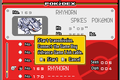 Share Pokédex data
 -
 Shared Pokémon


Pokémon Mystery Dungeon: Red Rescue Team
In Pokémon Mystery Dungeon: Red Rescue Team, the Game Boy Advance Game Link cable can be used to send SOS Mail, A-OK Mail and Thank-You Mail, all part of the Friend Rescue system, to another player of Red Rescue Team. The same process can alternatively be done without any additional hardware by using passwords, but sending a Helper Pokémon to the rescued player using A-OK Mail is only possible for Red Rescue Team players through a Game Link cable.
Appearances
Sometimes, the Link Cable itself appears or is mentioned in the games.
Core series games
Pokémon Omega Ruby and Alpha Sapphire
In Pokémon Omega Ruby and Alpha Sapphire, during the Delta Episode, the scientists at the Mossdeep Space Center intend to use a device called the Link Cable to direct the destination of the wormhole they intend to open to take the meteor off of collision course with the planet.
Pokémon Legends: Arceus
In Pokémon Legends: Arceus, an item known as the Linking Cord can be used to evolve certain Pokémon that would otherwise require trading to evolve.
Spin-off games
Pokémon Pinball series
In Pokémon Pinball and Pokémon Pinball: Ruby & Sapphire, the Link Cable is an in-game item used to evolve Pokémon that would normally require a trade to evolve. Like other methods of Evolution in the Pinball series, the player gets three Link Cable symbols under the time limit in order to complete the Evolution. Seadra and Clamperl do not need any other items to evolve.
The three Link Cable symbols can be used to evolve any of the Pokémon below. The Pokémon Pinball: Ruby & Sapphire manual calls this method "Evolution by Transmission".
| Evolves from | Evolves into | Pokémon Pinball | Pokémon Pinball: Ruby & Sapphire |
|---|---|---|---|
| Kadabra | Alakazam | ✔ | ✔ |
| Machoke | Machamp | ✔ | ✔ |
| Graveler | Golem | ✔ | ✔ |
| Haunter | Gengar | ✔ | ✘ |
| Seadra | Kingdra | ✘ | ✔ |
| Clamperl | Huntail | ✘ | ✔ |
| Gorebyss | ✘ | ✔ |
Gallery

|

|

|
| Link Cable sprite from Pinball |
Link Cable counter from Pinball |
Link Cable sprite from Pinball: Ruby & Sapphire |
Pokémon Mystery Dungeon series

In the Pokémon Mystery Dungeon series, the Link Cable is an Evolution item that is used to evolve Pokémon that would normally require a trade to evolve.
Pokémon Pokopia
In Pokémon Pokopia, if two Game Boy systems are placed next to each other with their tops facing one another, a Link Cable appears in-between the two systems to connect them.
In the manga
Pokémon Adventures
Omega Ruby & Alpha Sapphire arc
A device called Link Cable was first mentioned in Swampert Smashes, when Professor Cozmo explained that the dimensional shifter will create an entrance and an exit connected by Link Cable.
In Omega Alpha Adventure 21, the Link Cable was fitted on the Magma Suit and the Aqua Suit to teleport Ruby and Sapphire back to the ground once Grand Meteor Delta was destroyed. However, it ended up becoming nonfunctional once the life support system was destroyed by Organism No. 1.
In other media

A Pocketful of Adventures
In PPA06, Madoka Akagi and Kageaki Hiyama used a Game Link Cable to battle each other on their Game Boy. Madoka eventually managed to win the match, despite Hiyama's strategies.
In other languages
| Language | Title | |
|---|---|---|
| French | Câble Link (Game Boy) | |
| German | Linkkabel (Zubehör) | |
| Italian | Cavo Game Link | |
| Portuguese | cabo Game Link | |
References

|
This game mechanic article is part of Project Games, a Bulbapedia project that aims to write comprehensive articles on the Pokémon games. |