

User:Team Rocket Grunt/Fan theories

As a long-standing franchise filled with mysteries and unique quirks, Pokémon has inspired countless fan theories, headcanons, and speculations. Many of these ideas have become widely shared trivia within the fan community, sometimes blurring the line between official canon and fan-created content. While some elements may have factual basis in the Pokémon universe, the conclusions drawn are often purely speculative. It is therefore important to distinguish between what is officially part of the lore and what is fan interpretation.
Theories
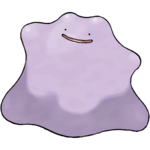
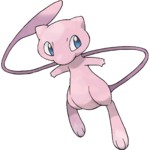
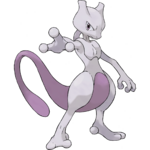
Ditto is a failed clone of Mew
Ditto is often speculated to be connected to the story of Mewtwo's creation on Cinnabar Island, where scientists used Mew's DNA to create a genetically enhanced clone. Ditto itself is unable to breed, making its origin and method of multiplication a mystery. Some fans suggest this could be explained if Ditto was artificially created, since Pokémon being designed through scientific experiments is a recurring theme in Generation I, like Porygon, Koffing or Voltorb.
Several traits link Ditto to Mew: its pink body, the ability to use the move Transform, its shiny form being blue (matching Mew's color palette), and even sharing the same weight as Mew. These similarities have led many fans to theorize that Ditto represents failed cloning experiments on Mew that took place before Mewtwo's successful creation. Ditto also appears in two locations associated with Mewtwo: the Pokémon Mansion on Cinnabar Island, where records of its creation are found, and the Cerulean Cave, where Mewtwo resides.
When asked about this theory, Game Freak director Junichi Masuda stated that he had never heard of it. Some fans interpret this response as intentional, suggesting that Masuda preferred not to confirm or deny the theory in order to avoid establishing it as fact. This ambiguity allows the idea to remain open-ended, keeping fans curious and engaged.
|
|
|
| Ditto | Mew | Mewtwo |
Blue's Raticate has died
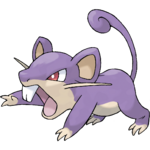
In the Kanto-based Pokémon games, the Rival character, commonly known as Blue, appears to be missing his Raticate during the battle in the Pokémon Tower, a burial ground for deceased Pokémon. He retains all other Pokémon in his party throughout the game until this point. This has led some fans to speculate that he lost Raticate prior to this encounter, or that it may have been harmed in a previous battle against the player.
Supporting this theory is the fact that, upon meeting the player in Pokémon Tower, Blue appears surprised and asks if the encounter is due to the death of one of his Pokémon. Fans have also noted that Raticate's level is below the threshold required for Rattata to evolve, suggesting that Blue may have overtrained his Pokémon, which aligns with his competitive and meticulous character.
Another possible explanation is that Blue left Raticate out of his team to allow it to grow stronger or because it is weaker than his other Pokémon. Blue is also known for collecting Pokémon to complete the Pokédex, often boasting about the number he has caught. At the Pokémon Tower, he mentions catching a Cubone there, a Pokémon he does not use in battle, which could indicate his focus on collecting rather than immediate battle readiness.
|

|
| Rattata | |

| |
| Raticate | Blue |
Kanto war
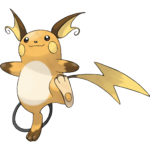
In the Kanto-based Pokémon games, the third Gym Leader, Lt. Surge, is portrayed as an American soldier with the title of Lieutenant who previously served in war. He mentions that Electric-type Pokémon saved his life, that he used them to power his plane, and that he was a strict and cautious commanding officer to Gentleman Tucker, a trainer in his gym. The inclusion of serious topics such as military service, war, and real-world nationalities has led some players to speculate about the existence of poltical structure of them Pokémon world and a possibility of war happening in the past.
One theory suggests that such a war occurred in the Kanto region. This could explain the prevalence of hospitals, the small size of cities, the relative absence of adult men aside from criminals associated with Team Rocket, and why children travel alone and battle each other with their Pokémon.
Another aspect of the theory posits that the Kanto region may exist in a post-atomic context, where nature is contaminated with nuclear waste. This could account for the emergence of certain Pokémon, particularly Poison types such as Koffing and Grimer, as well as many Poison-type plant Pokémon like Oddish and Bellsprout's evolutioanry lines.
The theory also raises questions about Lt. Surge's American origin. Interestingly, one Pokémon card depicting Lt. Surge shows a map of Poland with arrows referencing World War II troop movements. However, as the games are set around their release in 1996, it is unlikely that Surge directly participated in that conflict. It is more plausible that he represents a stationary American soldier in Japan, possibly with prior military experience unrelated to the events in Kanto.

|

|
| Voltorb | |
| |
| Raichu | Lt. Surge |
Cubone is a baby Kangaskhan
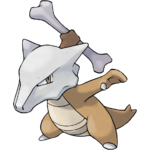
In Generation I, players are introduced to Cubone, an orphan Pokémon said to wear the skull of its deceased mother, leaving its true face unknown. In the story, there is a specific Cubone whose mother was killed by Team Rocket in the Pokémon Tower, and whose spirit must be calmed. It is unclear whether every Cubone loses its mother when born or if this is a unique situation.
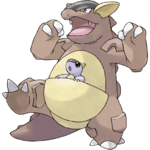
Another Pokémon, Kangaskhan, is a motherly Pokémon that always carries its baby in its pouch, visibly resembling Cubone, as both are brown, bipedal mammals with reptilian features. This similarity has led some fans to speculate that Cubone's skull may conceal the fact that it is actually a Kangaskhan baby whose mother died. This idea could explain how every Cubone could be an orphan.
When scanned with the Silph Scope, Cubone's mother appears as a Marowak, the evolved form of Cubone, rather than a Kangaskhan. While this is canonically accurate, fans believe the Kangaskhan connection may reflect an earlier concept that was altered before the games' release. Supporting this idea, some leaks from beta games and development materials show a scrapped Marowak evolution back sprite resembling Kangaskhan wearing a skull, holding what appears to be a baby in its arms.
Additional speculation arises from Giovanni, the Ground-type Gym Leader and Team Rocket boss, who uses Kangaskhan outside his gym battle. This may hint that Kangaskhan was originally intended to be Ground-type, like Cubone and Marowak. Some Team Rocket Grunts also use Cubone, which could represent a weaker version of the boss's Pokémon.
Cubone and Marowak often appear together in various scenarios: both are found in Rock Tunnel near Pokémon Tower, they are listed consecutively in the Johto Pokédex, and Kangaskhan can appear in SOS battles when called by Cubone, where Pokémon normally call their evolved form. These patterns further support the fan theory linking Cubone, Marowak, and Kangaskhan.

|
|
|
| Cubone | Marowak | Kangaskhan |
N is a Zoroark
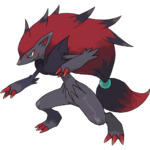
N is a unique character in the Pokémon games, known for his ability to communicate directly with Pokémon. Some fans speculate that this ability could be explained if N were actually a Zoroark, a Pokémon introduced in the same generation that can create illusions, transform into a human, and speak the human language. Visual similarities also support this idea: N's long, bushy hair resembles Zoroark's mane, and some fans note a visual play on the letters "N" and "Z", referencing Zoroark.
N is said to have been adopted by Ghetsis, who does not regard him as a son, though they share the same hair color, which some fans interpret as suggesting a possible biological connection. Otherwise, N's origins are largely unknown, aside from the fact that he grew up around wild Pokémon, including a Zorua.
An intriguing detail appears in Pokémon Black 2 and White 2, where players can interact with certain NPCs to hear shared memories. A Zoroark shares a memory of N with a Plasma Grunt despite not being present in that memory itself, unlike other characters. Fans interpret this as a subtle hint that the Zoroark could actually be N, further supporting the theory.

|

|

|
| Zorua | ||
| ||
| N | Zoroark | Ghetsis |
Reincarnation of legendary beasts
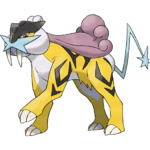
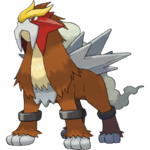
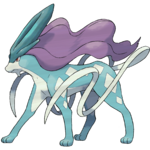
In Ecruteak City, there is a legend about two towers built for the Legendary Pokémon Ho-Oh and Lugia. According to the story, Lugia's tower burned down, resulting in the deaths of three Pokémon, which Ho-Oh subsequently reincarnated as Raikou, Entei, and Suicune. These Legendary Beasts now serve Ho-Oh and observe the world on its behalf.
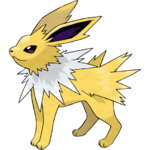
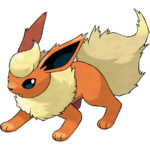
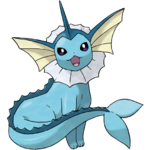
Fans have speculated about which Pokémon may have died in the fire. A popular theory suggests that the original Pokémon could have been the Eevee evolutions: Vaporeon, Jolteon, and Flareon. These three share the same types as Raikou, Entei, and Suicune (Water, Electric, and Fire) and are closely associated with Ecruteak City, partly due to the prominence of Kimono Girls in the city, which use Eevee evolutions. In later generations, these species also share corresponding abilities: Water Absorb, Volt Absorb, and Flash Fire.
In Generation IX, new Pokémon species, Walking Wake, Raging Bolt, and Gouging Fire, were introduced. These dinosaur-like, prehistoric versions of the Legendary Beasts have led some fans to speculate that they are the original forms of Raikou, Entei, and Suicune. However, the official explanation presents them as existing in an alternate timeline rather than being direct predecessors of the Legendary Beasts.
|
|
|
| Raikou | Entei | Suicune |
|
|
|
| Jolteon | Flareon | Vaporeon |
Lavender Town syndrome
The legend claims that the music of Lavender Town in the original Pokémon Red and Blue games contains high-pitched frequencies or sound waves that could cause negative psychological effects in children, such as headaches, nausea, anxiety, or even suicidal thoughts. The story gained traction in the late 1990s and early 2000s through online forums, creepypastas, and fan websites, often accompanied by “evidence” of mysterious deaths in Japan.
In reality, there is no scientific evidence supporting these claims. The story is widely considered a hoax and a classic example of a video game creepypasta. Some versions of the story exaggerate details, claiming hundreds of children died or that the music was deliberately designed as a psychological experiment, but these are fictional embellishments.
The legend persists in Pokémon fan culture due to the eerie, unsettling tone of the Lavender Town music, which is unusual compared to other tracks in the game. It has inspired memes, fan art, and even musical remixes that mimic the high-pitched tones described in the story.

|
| Lavender Town |
Genesect is modified Kabutops
In Generation V, the mythical Pokémon Genesect was introduced as an ancient bug Pokémon that lived approximately 300 million years ago and was revived by Team Plasma, who upgraded the cannon on its back. Some fans speculate that Genesect may be based on Kabutops due to their similar body shapes, shared prehistoric era, and the fact that Kabutops is modeled after an animal closely related to arthropods. This idea aligns with the theory that fossil Pokémon often have their original types replaced with Rock upon revival, suggesting that Kabutops may have been Bug/Water-type before extinction. Additionally, Genesect's high-speed, streamlined body resembles Kabuto, Kabutops' pre-evolution.
It is also likely that Genesect draws inspiration from Kabutops because many Generation V Pokémon were designed with nods to Generation I species, as the fifth generation served as a soft reboot of the franchise, filling in previous niches. Genesect may also partially reference Mewtwo: it is a purple, humanoid Pokémon created by an evil team and enhanced to serve as a powerful weapon.
Supporting this connection, a Genesect Pokémon card references an older Kabutops card, further suggesting intentional design inspiration from the classic fossil Pokémon.

|

|
| Kabuto | Kabutops |

|

|
| Genesect | Genesect |
Venomoth and Butterfree were swapped
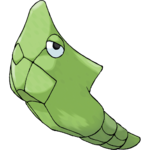
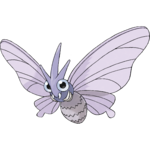
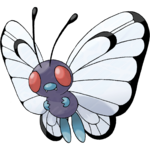
Some fans have noted the visual similarities between Venonat and Butterfree: both are almost identical, differing primarily in that Butterfree has wings. This has led to speculation that the original evolutionary line may have been intended differently, with Caterpie and Metapod possibly evolving into Venomoth before the current design was finalized.
Caterpie and Metapod also share similarities with the other butterfly Pokémon, Venomoth. Caterpie appears to be based on a swallowtail butterfly, while Venomoth's hindwing protrusions resemble those of swallowtails. Both Pokémon feature spiral-shaped eyes and horn-like structures on their faces. Interestingly, Venomoth's original design was light blue with yellow spots, which may have been changed to purple to emphasize its Poison typing.
The Pokémon Encyclopedia even separates Venonat and Venomoth in its listing, noting that the evolution between them is a mystery.
However, contrary to this theory, in the original games, Pokémon are generally listed in the Pokédex according to the order they were added to the game. Venomoth appears before Venonat, and the Caterpie line, with Butterfree at the end, follows later. This suggests that the Caterpie line may have been considered complete at that point, and if any evolutionary swap was intended, it likely occurred before the indexing process, or the Pokédex order would have been altered, which seems unlikely given the disorganization of some evolutionary lines.

|
|
|
| Caterpie | Metapod | Venomoth |

|
| |
| Venonat | Butterfree | |
Gengar is Clefable's shadow
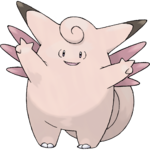
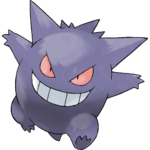
Some fans have speculated that Gengar may be conceptually linked to Clefable, based on Pokédex entries describing Gengar as a living shadow that hides in the shadows of its victims. The two Pokémon share similar body shapes, and Gengar's name is derived from "doppelgänger", reinforcing the idea of it being a shadowy counterpart.
In early generations, Clefable was Normal-type, which could symbolically complement Gengar's Ghost typing, representing opposites: Normal and Ghost types traditionally cannot damage each other, emphasizing their untouchable relationship. Additionally, Clefable's association with the moon contrasts with Gengar's shadowy behavior, as Gengar is said to be active during the full moons, mimicking the shadows of others.
|
|
| Clefable | Gengar |
Missingno.
MissingNo. is a famous glitch Pokémon that appears in the original Pokémon Red and Blue games, capable of being encountered and captured despite its unintended, glitched nature. Its unusual, corrupted appearance has made it a popular subject for fan speculation.
Several different forms of MissingNo. can be encountered in the games, and one particular glitch form can reportedly evolve into Kangaskhan when given a Rare Candy. This has led some fans to speculate that MissingNo. may have originally been intended as a baby or pre-evolution of Kangaskhan.

|

|
| MissingNo. | MissingNo. |
Golem and Machamp's trade evolution
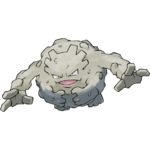
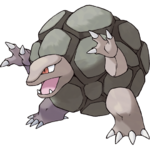
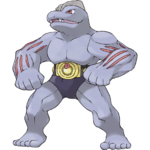
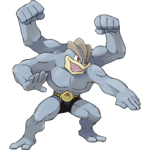
Some fans have speculated about unusual patterns in Pokémon trade evolutions, particularly focusing on Graveler into Golem and Machoke into Machamp. When Graveler evolves into Golem, its appearance changes drastically: it becomes more reptilian and loses features such as its second pair of arms, which is unusual for an evolution, as evolutions typically enhance existing traits. By contrast, Machoke gains a second pair of arms when evolving into Machamp while losing its more humanoid, less reptilian features. Both Graveler and Machoke evolve through trading, which has led some fans to speculate that they may have originally been intended to evolve when traded with each other, mixing and redistributing physical traits. This idea may have been inspired by Generation V trade evolutions, such as Shelmet and Karrablast, which require trading with each other to trigger evolution. Some fans also draw thematic connections to first-generation lore, where Bill accidentally transformed into a Pokémon while experimenting with Pokémon transfer technology.
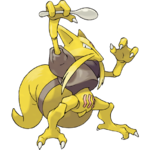
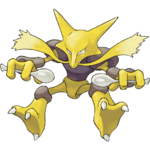
Another pair of trade-evolving Pokémon, Kadabra into Alakazam and Haunter into Gengar, has also fueled speculation. Kadabra loses its tail, weight, and certain body markings when evolving into Alakazam, while Haunter gains a physical body from its evolution, Gengar, becoming much heavier and corporeal rather than gaseous. Some fans interpret this as Kadabra performing occult or ritualistic practices, using ghostly forces to gain otherworldly knowledge and power, with Haunter representing the bound spirit that Kadabra channels into the physical world.
|
|
|
|
| Graveler | Golem | Kadabra | Alakazam |
|
|

|
|
| Machoke | Machamp | Haunter | Gengar |
Will is Lorelai's alterego
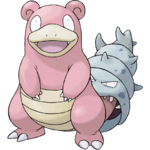
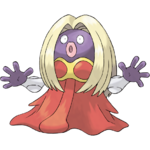
In the Johto-based games, the Elite Four member Will wears a mask that conceals his identity. Fans have speculated that Will might actually be Lorelei in disguise, based on several clues: all of his Pokémon are female, what was typical for female characters in older generations, he uses Jynx and Slowbro, and he has hair that appears either purple or red. These traits align closely with Lorelei, a former Elite Four member of the Indigo League, who is notably absent three years after her previous appearance. This has led some fans to theorize that Lorelei may have adopted a disguised identity to continue her role within the Elite Four.

|
|

|
| Slowbro | ||
| ||
| Lorelei | Jynx | Will |
Ilima and Mina were swapped
Some fans believe that the Trial Captains of the Alola region may have originally been assigned different roles during the development of the games. In this theory, Mina and Ilima might have swapped their type specializations before the final version.
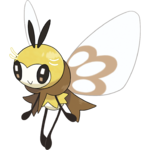
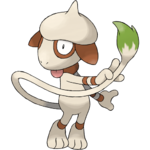
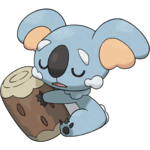
Mina, the artistic painter, would thematically fit as a Normal-type specialist. Pokémon such as Smeargle, the painter Pokémon, and Komala, which share color similarities with Mina's outfit (blue-gray tones and white puffs), would suit her design. These Pokémon, however, were instead given to Ilima. At the same time, Ilima's character theme could align well with Mina's actual Fairy-type team. Ribombee, with its small brown scarf, mirrors Ilima's sleeveless vest, both pieces of clothing representing a preppy academic style that reflects Ilima's role at the Trainers' School. Granbull, another Fairy-type used by Mina, can also be seen as a "guard dog" associated with high-class families, matching Ilima's refined appearance.
Additional details strengthen this idea. Ilima's pink hair is a color commonly linked to the Fairy type, and his shiny, dreamy eyes resemble those of Valerie, the Fairy-type Gym Leader, as well as the Fairy Tale Girl Trainer class. These similarities could suggest that Ilima was originally intended as the Fairy specialist instead of Mina.
It has also been speculated that the change may have been influenced by concerns over presentation. Assigning a young, well-dressed, pink-haired boy to the Fairy type might have been considered too close to certain stereotypes, since "fairy" has historically been used as a derogatory term for homosexual men. To avoid unintended implications, the roles may have been swapped, with Mina taking on the Fairy type instead and Ilima becoming a more neutral Normal-type specialist.

|
|
|

|
| Ribombee | Smeargle | ||

|
| ||
| Mina | Granbull | Komala | Ilima |
Team Rocket's involvement with Mewtwo
Unlike in other Pokémon media such as the anime or manga, Team Rocket is not directly tied to the creation of Mewtwo in the games. However, many fans speculate that the storylines may still be connected. While these plots are largely separate, there are several intriguing overlaps.
Mewtwo's origins in the games are linked to Dr. Fuji, a close friend of Blaine and likely the former owner of the Pokémon Lab on Cinnabar Island. According to the Pokémon Mansion journals, Fuji conducted experiments using DNA collected from Mew in Guyana, ultimately leading to Mewtwo's creation. Blaine's backstory also hints at connections to legendary Pokémon, as he once encountered Moltres while lost in the mountains. Supporting this theme, one of the Cinnabar Lab computers mentions a research team investigating legendary birds, a clear parallel to Fuji's expedition for Mew's DNA.
Team Rocket's storyline, meanwhile, begins at Mt. Moon, where they attempt to steal fossils that can later be revived in the Cinnabar Lab. They also occupy the Pokémon Tower in Lavender Town and are responsible for killing a Cubone's mother. Mr. Fuji, now living in Lavender Town near the cemetery, scolds Team Rocket for these crimes. Interestingly, when the player encounters Fuji inside Pokémon Tower, he does not appear especially threatened by the grunts guarding him, almost as if they were cooperating rather than hostile. One Rocket Grunt even remarks that Fuji entered their otherwise secret hideout on his own, raising questions about how he knew of its location. This has led to speculation that Fuji's past research may have left him with lingering connections to Team Rocket.
Accessing the Pokémon Tower also requires the Silph Scope, a device made by Silph Co. in Saffron City that allows ghosts to be seen. Team Rocket possesses one in their Celadon City hideout, likely stolen or otherwise acquired from Silph. It's unclear why they were interested in such technology, but some fans believe it was part of an effort to capture Ghost-type Pokémon, which, in theory, could counter Psychic-types like Mewtwo. In Generation I, however, Psychic-types are strangely effective against Ghosts, likely due to a programming error, even though the intended type matchup seems to have been the opposite.
Later, when the player defeats Team Rocket at Silph Co., they receive a prototype Master Ball from the company president. The Master Ball, purple with an "M" on its front, seems deliberately suited to Mewtwo: it can catch any Pokémon without fail, and Mewtwo is the strongest encounter in the Kanto games. Silph Co.'s scientists also reveal shades of moral ambiguity, with some defecting to Team Rocket to pursue unethical experiments, echoing the research carried out at the Cinnabar Lab.
Another link between these groups comes through Porygon. In some sources, Porygon is said to have been created by Silph Co., while in others it was created at the Cinnabar Lab, both organizations tied to controversial Pokémon experiments. In the games, Porygon can only be obtained from the Celadon Game Corner, a gambling operation run by Team Rocket, further connecting it to their influence.
Taken together, these details suggest that while the games never state outright that Team Rocket helped create Mewtwo, the overlapping roles of Fuji, Blaine, Silph Co., and Team Rocket paint a picture of interconnected storylines, where corporate ambition, unethical science, and organized crime are never far apart.

|

|

|
| Mr. Fuji | Silph Scope | |

|
| |
| Master Ball | Team Rocket | Mewtwo |
PokéGods
During the Generation I era, as the release of the second generation approached and a handful of new Pokémon were revealed, fans in the West were often poorly informed. The internet was still in its infancy, most fans were children, and very few understood Japanese. As a result, rumors and wild theories about hidden or upcoming Pokémon spread rapidly through schoolyards, magazines, and early fan communities.
The most common and consistent rumors centered on so-called "PokéGods", secret Pokémon beyond the standard 150. In reality, many of these "PokéGods" were simply early sightings or leaks of Generation II Pokémon, evolutions of existing species, or entirely made-up creations born from playground speculation.
The elusive nature of Mew also fueled the mystique of hidden Pokémon within the original games. In Vermilion City, players discovered a mysterious truck parked near the harbor. Normally inaccessible during regular gameplay, it could only be reached by skipping the S.S. Anne quest using a traded Pokémon with Cut, then later returning with Surf to cross the water. In the original games, the truck served no purpose at all, but its strange presence led to endless fan theories. The most famous claimed that Mew was hidden beneath the truck, unlocked only by performing a convoluted series of steps. Even though later remakes added a Lava Cookie as a nod to the legend, the myth of "Mew under the truck" remains one of the most enduring stories in Pokémon history.
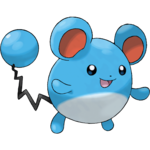
Among the supposed PokéGods, the most notable was "Pikablu", the fan nickname for Marill before its official reveal in Generation II. With its round shape and blue color, many believed it to be a special evolution of Pikachu, or even a mythical Pokémon beyond the existing roster.
Another widely circulated rumor involved "Bill's Secret Garden". Behind Bill's house at Cerulean Cape lies an unused patch of land visible on the map but inaccessible to players. Fans speculated that this hidden area contained secret Pokémon, with some claiming it was possible to catch rare or legendary creatures there, or even discover brand-new species. Similarly, patches of grass near Pallet Town were rumored to hide starter Pokémon.
Together, these myths reflect the excitement and mystery of the Generation I era, when limited information and boundless imagination turned every odd detail, from unused sprites to unreachable map tiles, into the seeds of Pokémon legends.

|
|
| Sea Cottage | Marill |
Rock-type fossilization
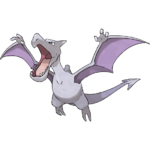
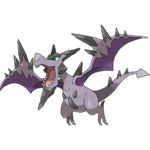
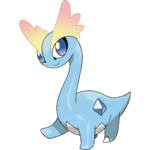
One of the most iconic categories of Pokémon are those revived from fossils in laboratories. Up until Generation VI, all fossil Pokémon shared the Rock type. This has led fans to speculate that the process of fossilization may have altered their bodies, causing them to gain the Rock type, meaning they are not revived exactly as they were before extinction. The idea feels plausible, since it would be unusual for every prehistoric Pokémon to naturally have the Rock type. Supporting this theory, Mega Aerodactyl's Pokédex entry explicitly states that its regular form is not its true original state, implying that fossil revival does not fully restore Pokémon to how they once were.
A counter-argument to this theory points out that some fossil Pokémon, like Kabuto, are said to still exist in the wild and remain Rock type, suggesting that this typing may in fact be natural. Another explanation is that only Rock-type Pokémon fossilized well enough to be revived, while other types of ancient creatures simply could not survive the fossilization process.
Generation VIII introduced a twist on the formula with four "mismatched" fossil Pokémon: Dracozolt, Arctozolt, Dracovish, and Arctovish. These hybrids are the result of combining unrelated fossil pieces, creating Pokémon that never actually existed in the past. Interestingly, none of them are Rock type, which makes sense, since their typings are drawn directly from the halves they are assembled from, rather than being influenced by fossilization.
If we assume the fossilization theory is correct, fans have speculated on what the original types of fossil Pokémon may have been before gaining Rock:
- Omanyte and Omastar, Likely still Rock due to their hard shells, which are a central part of their design.
- Kabuto and Kabutops, Possibly Bug type, given their resemblance to arthropods and trilobites.
- Aerodactyl, Often theorized to have been Dragon type, supported by a Pewter Museum NPC who calls it a dragon. Aerodactyl's Mega Evolution, which is covered in stone, is described in the Pokédex as representing its true original form, coutering the theory and supporting the idea that Rock was indeed its original type.
- Lileep and Cradily, Potentially Water type, since they were aquatic creatures.
- Anorith and Armaldo, Also likely Water type, as their natural habitat was the sea.
- Shieldon and Bastiodon, Possibly Dragon type, reflecting their dinosaur origins and Pokémon's frequent association of dinosaurs with dragons.
- Cranidos and Rampardos, Rock typing is likely natural here, as their defining trait is their hard skull.
- Archen and Archeops, Possibly Dragon type, being dinosaur-like Pokémon with flying abilities.
- Tirtouga and Carracosta, Rock typing could be natural due to their hard shells.
- Tyrunt and Tyrantrum, Possibly Dark type, reflecting their tyrannical and aggressive nature.
- Amaura and Aurorus, Potentially Electric type, due to their connection with auroras and frequent use of Electric-type moves.

|
|
|
|

|

|
| Omanyte | Kabuto | Aerodactyl | Aerodactyl | Lileep | Anorith |

|

|

|

|

|
|
| Cranidos | Shieldon | Archen | Tirtouga | Tyrunt | Amaura |
Fire starters in chinese zodiac
As the Pokémon series progressed, some fans began noticing a pattern among the Fire-type starter Pokémon: many of them appear to be inspired by animals that can be loosely mapped to the Chinese zodiac, though some interpretations require a degree of flexibility. The Fire-type starters and their corresponding zodiac animals are often suggested as follows:
- Charmander - Dragon
- Cyndaquil - Rat. Some fans dispute this, arguing it is more based on a porcupine, and its evolution resembles a badger. However, its Japanese species name, Hinezumi, literally means "fire mouse/rat", and there is a Japanese mythological creature by that name.
- Torchic - Chicken
- Chimchar - Monkey
- Tepig - Pig
- Fennekin - Dog. While Fennekin is based on a fennec fox, foxes belong to the Canidae family, which is a family of dog-like animals.
- Litten - Tiger
- Scorbunny - Rabbit
This leaves four zodiac animals — Ox, Snake, Horse, and Sheep — unaccounted for, along with the newest Fire starter, Fuecoco, a crocodile. At first glance, Fuecoco does not fit this pattern. Interestingly, the Old Mongol calendar replaces the Dragon with a crocodile, though that would require reassigning Charmander to another zodiac animal, such as Snake. Another interpretation is that male crocodiles are sometimes referred to as "bulls", linking Fuecoco to the Ox.
This theory is unlikely to have been planned from the very beginning, since the existence of future starters was unplanned yet. Beta versions of Pokémon Gold and Silver even included a Fire starter resembling a bear. However, this does not rule out the possibility that the creators noticed the pattern and continued it in later generations.
Supporting the idea of deliberate zodiac assignments, Shigeki Morimoto once stated in an interview that he created Piloswine to complete the Chinese zodiac in Generation II. By extension, fans have theorized Pokémon corresponding to each zodiac animal, including:
- Dragon - Dragonite, Gyarados, Lugia
- Rat - Raticate, Marill
- Chicken - Dodrio, Ho-Oh
- Monkey - Primeape, Aipom
- Pig - Primeape, Piloswine
- Dog - Arcanine, Houndoom
- Tiger - Arcanine, Raikou
- Rabbit - Nidoran, Wigglytuff, Azumarill
- Ox - Tauros, Miltank
- Snake - Arbok, Dunsparce
- Horse - Rapidash, Girafarig
- Sheep - Mareep
Similarly to the Fire starter pattern, some fans speculate that Grass-type starters are inspired by extinct animals, while Water-type starters might be based on weapons.
 |
Charmander | Dragon |  |
Dragonite |
 |
Cyndaquil | Rat |  |
Raticate |
 |
Torchic | Chicken |  |
Ho-Oh |
 |
Chimchar | Monkey |  |
Primeape |
 |
Tepig | Pig |  |
Piloswine |
 |
Fennekin | Dog |  |
Houndoom |
 |
Litten | Tiger |  |
Raikou |
 |
Scorbunny | Rabbit |  |
Azumarill |
 |
Fuecoco | Ox |  |
Tauros |
| Snake |  |
Arbok | ||
| Horse |  |
Rapidash | ||
| Sheep |  |
Mareep | ||
Ash is in a coma
Ash is famously depicted as remaining 10 years old, despite the Pokémon anime having aired for over 26 years. This has led some fans to speculate that Ash might actually be in a coma, with the fantastical world of Pokémon existing only within his imagination. This idea is similar to other "creepy cartoon" theories, in which long-running animated series are interpreted as the imagined or dreamt experiences of their protagonists.
Certain events in the series are cited as supporting this theory. In the very first episode, Ash encounters a flock of Spearow and, along with Pikachu, is struck by lightning. Fans suggest that this traumatic event could have triggered the coma. Later in the same episode, Ash glimpses a Ho-Oh, an extremely rare Pokémon whose Pokédex entry claims it can "promise eternal happiness" to those who see it. Some fans interpret this as an ironic hint that the Pokémon world Ash experiences is a kind of eternal, dreamlike happiness generated by his subconscious as a result of the traumatic event.

|

|
| Lightning that struck Ash | Ho-Oh |
Ash's father
Ash's father is mentioned in the second episode of the anime (in the English dub) and again toward the end of the series, yet he is never actually seen. Fans have long speculated about his whereabouts. In interviews, the creators have stated that Ash's father is a Pokémon Trainer on his own journey.
This ambiguity has led to speculation that some characters encountered in the series could actually be Ash's father. One of the most popular theories points to Giovanni, since it is a common storytelling twist for a protagonist's parent to be the main villain. Supporters of this theory note that Giovanni uses Jessie and James to keep an eye on Ash, which could imply a personal interest.
Another contender is Professor Oak, the male figure living next door to Ash and his mother, Delia. Oak is a mentor figure and is occasionally present during Ash's journey, which has led some fans to speculate that he could secretly be Ash's father. The idea is further supported by the playful notion, popular in the Pokémon fandom, that Oak sends the player on an adventure to "seduce" Ash's mother.
Other possibilities include Silver, a character met by Ritchie who shows particular interest upon hearing Ash's name. Some fans even point to a man in the episode Strategy Begins at Home! who owns a Rapidash; however, in that episode, Ash only mentions being fascinated by the Pokémon and does not refer to the man himself.
Interestingly, one of the final episodes of Ash's series is dedicated to him meeting his father, though Ash ultimately misses the encounter, leaving the mystery unresolved.

|

|

|
| Silver | ||

| ||
| Giovanni | Professor Oak | Rapidash's trainer |
Pokédex is written by childen
After reading various Pokédex entries, some fans have noticed that many of them are unrealistic or inconsistent with other information. Combined with the fact that, in every game, the player, a child character, is tasked by a professor to collect Pokémon and fill out the Pokédex, this has led some fans to believe that many entries are canonically written by children, lacking the professional rigor of an actual researcher.
The games themselves are often unclear about how the Pokédex records data. It is said to automatically register information about Pokémon, yet some entries describe past occurrences or folklore, suggesting that the device might pair newly registered species with common knowledge, and the player's role is simply to confirm their existence.
Some of the most unusual claims in Pokédex entries include Pokémon weights. None of them exceed one metric ton, even massive species such as the 8-meter-long Onix, which is made out of rocks. Fans frequently mention Wailord, whose density is calculated in some fan theories to be less than that of air.
Temperature entries are also extreme. Magcargo and Camerupt are said to reach up to 10,000°C, far hotter than typical magma (up to 1,300°C) and even hotter than the Sun's surface. While these temperatures would not destroy the Earth given their size, they would be highly dangerous in close proximity.
Other feats strain credibility in terms of speed and strength. Machamp is described as being capable of performing 1,000 punches per second with its four arms, which seems improbable, especially considering its relatively low Speed stat of 55. Ponyta is claimed to be able to jump over structures like Tokyo Tower or the Eiffel Tower, which seems unrealistic even for a Pokémon.
These examples illustrate that, while the Pokédex provides fascinating lore, its entries are often exaggerated or inconsistent, highlighting a blend of gameplay mechanics, storytelling, and playful exaggeration rather than strict scientific accuracy.

|
| Pokédex |
Prediction of Munna
In the Generation I games, there is a female NPC standing in front of Rock Tunnel who complains about the Pokémon in the cave being large and rough. She expresses a wish for a Pokémon that is pink and has flowers on its body. Some fans have speculated that this dialogue may have inspired the creation of Munna, a pink, floral-patterned Pokémon introduced in later generations.

|
| Munna |
Ariana as Silver's mother
The idea that Giovanni is Silver's father began as a fan theory but has largely been confirmed by in-game events. Fans initially speculated about a connection between Silver and Team Rocket due to his unusual attitude toward the organization. In Pokémon FireRed and LeafGreen, the player learns that Giovanni has a red-haired son, fueling further speculation.
In Pokémon HeartGold and SoulSilver, during the Ilex Forest event with Celebi, players can travel in time and uncover details confirming the link between Silver and Giovanni. However, questions remain about Silver's mother. Starting with Generation IV, where Silver received a redesign and Team Rocket admins were given distinct artwork, many fans concluded that Ariana, a Team Rocket admin, could be Silver's mother and Giovanni's partner. Ariana is closely associated with Giovanni, and her hairstyle, vibrant red with an upward tip, resembles Silver's.
Some fans have gone further, connecting Roark and Mars to this "family" based on hairstyle similarities. Both are Generation IV characters, like Silver and Ariana's redesigns. Roark, the son of Byron, shares thematic ties with Giovanni: all three are gym leaders specializing in ground-related types, Giovanni uses Ground, Roark uses Rock, and Byron uses Steel. Similarly, Mars shares a connection to Giovanni and Ariana through her membership in an evil organization.
These connections suggest a loosely interpreted "family network" linking Team Rocket and certain Generation IV characters, blending bloodlines, thematic roles, and shared visual design cues.

|

|

|

|
| Silver | Ariana | Mars | Roark |
Ghetsis's arm
Ghetsis's right arm is almost always hidden under his robes, a consistent part of his design. The only time it is fully visible is in the intro video for Pokémon Black and White, but it appears darker or shadowed, which some fans interpret as a sign that something is wrong with it. Additionally, Ghetsis wears an eyepiece, leading to speculation that he might be hiding a missing or damaged eye.
These design choices, combined with his philosophy that Pokémon should be separated from humans and treated as tools, have led some fans to theorize that Ghetsis experienced a dangerous encounter with a Pokémon that left him both physically and psychologically scarred.
Supporting this idea is the fact that he owns an underleveled Hydreigon, a very powerful and aggressively hostile Pokémon, which also knows the move Frustration, a move that is most effective when the Pokémon lacks a bond with its trainer. Fans speculate that Ghetsis may have been forcing his Hydreigon to evolve, or that it was so difficult to control that it left him resentful, further reinforcing his belief that Pokémon are tools rather than companions.
|
|

| |
| Ghetsis | Hydreigon | |
Humans are Pokémon
In the Pokémon world, Pokémon largely replace real-world animals, with only a few rare exceptions of actual animals appearing, which might even be considered mistakes. This has led some fans to speculate whether humans themselves might be a kind of Pokémon, or at least share a common ancestry with them. Analogous to humans being related to animals in the real world, humans in the Pokémon universe could theoretically be related to Pokémon.
One piece of in-game evidence comes from the Canalave Library in Sinnoh. There, a book of folk stories contains Sinnoh Folk Story 3, which claims that there was a time when humans and Pokémon ate together at the same table and even married each other. This suggests that humans and Pokémon may not have evolved completely separately.
Further supporting this idea is the way some humans act in-game. For example, in PokéStar Studios, certain human characters can be battled just like Pokémon, implying that humans in the Pokémon world might share some functional similarities with Pokémon.
At the same time, some Pokémon are strikingly human-like. For example, Machoke, Medicham, and Armarouge resemble people in both form and behavior. Others, like Slowking and Oranguru, display intelligence on par with humans, they can strategize, issue commands, and even throw Poké Balls. Certain Pokémon, such as Latias, Ditto, and Zoroark, go a step further, possessing the ability to disguise themselves as humans entirely.

|

| |
| Black Belt | Oranguru | |
Oak and Agatha's past
When the player is challenged by Agatha of the Elite Four, she mentions that she used to know Professor Oak, but expresses disdain for him, criticizing him for giving up on battles and focusing on Pokémon research through the Pokédex instead. This interaction implies a strong past connection, possibly one of admiration or even a romantic relationship, that ended on sour terms.
Supporting this, there is an unused battle against Professor Oak in the Generation I games, in which his team outperforms the Champion, suggesting that he was originally intended to be an extremely strong trainer, as Agatha implies. Additionally, in Oak's lab, there is a letter from the Pokémon League (of which Agatha is a member) warmly inviting him, further hinting at a close association between them. In Pokémon HeartGold and SoulSilver, Kurt's house contains a photo of Oak, Kurt, and a woman who is most likely Agatha, supporting the idea of an old friendship or connection.
An interesting twist comes from Pokémon Masters, which sheds new light on the famous Gengar vs. Nidorino battle, an iconic matchup depicted at the start of the games, anime, and other media. In this depiction, Professor Oak owns Nidorino, the same Pokémon he sends out when welcoming the player in the main series, battling Agatha's Gengar. This suggests that the battle may have taken place long before the events of the games, representing a historic match between Oak and Agatha that helps explain their complicated relationship.
|
|
|

|
| Gengar | ||
| ||
| Professor Oak | Nidorino | Agatha |
Valerie as Bill's sister
A tourist in Kalos hotels mentions that Valerie comes from Johto, and her dialect resembles that of Kyoto, which corresponds to Ecruteak City in the Johto region. This connection has led some fans to speculate about her origins and potential ties to that region.
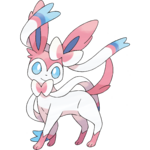
As a fashion designer whose outfits are stylized after traditional Japanese clothing, including kimono-like attire, and as a Fairy-type specialist who uses an Eeveelution, Valerie aligns closely with the Kimono Girls of Ecruteak City, all of whom also use evolutions of Eevee.
Further supporting this connection, Bill mentions a fondness for Eeveelutions, noting that his mother used to be one of the Kimono Girls and that his younger sister in Goldenrod City has trouble winking, which some fans interpret as a subtle reference to Valerie's uniquely fabled eyes.
What's interesting, Valerie copies the gym puzzle from Sabrina, a character from the nieghbour region to her homeland Johto and uses Mr. Mime in her gym battle like her.

|

| |
| Valerie | Bill | |
|

| |
| Sylveon | Kimono girl | |
Relicanth being a map
Relicanth plays a key role in unlocking the Sealed Chamber, which is necessary to access the temples of legendary golems that were sealed long ago by ancient human civilizations. Given that Relicanth is an ancient Pokémon and features a map-like pattern on its body, some fans speculate that this pattern may serve as a guide, pointing the way to the Sealed Chamber.

|
| Relicanth |
Pokemon Grey and Z
Historically, the Pokémon series has followed a pattern of releasing two mainline games, followed by a third enhanced version featuring a legendary mascot:
- Red and Blue, followed by Yellow, featuring Pikachu rather than a Legendary Pokémon
- Gold and Silver, followed by Crystal
- Ruby and Sapphire, followed by Emerald
- Diamond and Pearl, followed by Platinum
- Black and White, followed by Black 2 and White 2 instead of a "Gray" version
- X and Y, no third version; fans expected Z
- Sun and Moon, followed by Ultra Sun and Ultra Moon
- Sword and Shield, third version replaced with DLC: Isle of Armor and Crown Tundra
- Scarlet and Violet, third version replaced with DLC: Teal Mask and Indigo Disk
Fans were surprised when Black 2 and White 2 replaced the expected "Gray" version. In these games, Kyurem, originally a singular Legendary, gained two forms that fuse with the mascots of Black and White, providing a partial "third version" experience.
Another break in pattern was the absence of a Pokémon Z game, which many expected to spotlight Zygarde, the third member of the Aura Trio alongside Xerneas and Yveltal. Fans speculate that this version was planned but ultimately scrapped. Supporting this theory:
- Zygarde received new forms and plot relevance in Sun and Moon, which take place in Alola, far from its home region of Kalos.
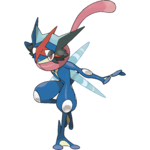
- Greninja also obtains a new form in Sun and Moon, despite not being native to Alola.
- Mega Evolutions, tied to Kalos and Hoenn, continue appearing in Alola, even though future regions usually introduce their own mechanics and drop previous ones, consistent with Game Freak's stated preference to give each game its own flavor.
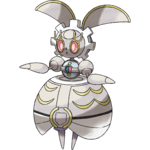
- Magearna, a Mythical Pokémon of Generation VII, is thematically more fitting for Kalos (a European-inspired region) than Alola.
- Generation VI ultimately saw only one new Pokémon receive a Mega Evolution, leaving the region's roster comparatively incomplete.
Adding to this theory is the fact that Pokémon Legends: Arceus and Pokémon Legends: Z in Generation IX revisit Kalos instead of Unova, which by precedent should have been revisited first, yet it was skipped.

|

|
|
|
| Zygarde | Zygarde | Ash-Greninja | Magearna |
Ultra Beasts as planets
Pokémon Sun and Moon introduced Solgaleo, representing the Sun, and Lunala, representing the Moon. Given the games' subtle alchemical and cosmic themes, fans have speculated about other Pokémon associated with space. Accompanying Solgaleo and Lunala are:
- Cosmog, resembling a nebula, a vast gas cloud in space
- Cosmoem, resembling a dense neutron star
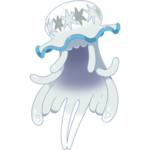
- Necrozma, which can fuse with Solgaleo and Lunala, possibly symbolizing solar and lunar eclipses
The seven Ultra Beasts introduced in Sun and Moon are often linked to the seven planets of the solar system (excluding Earth), based on planetary symbolism, mythology, or thematic elements:
- Nihilego as Mercury: Mercury is the god of trickery, boundaries, and communication, paralleling Nihilego's deceitful possession of Lusamine, with its flowing, intoxicating form reminiscent of the element mercury
- Pheromosa as Venus: Embodying beauty and femininity, like the goddess Venus
- Buzzwole as Mars: Masculine and strong, with blood-related traits as a mosquito, reflecting Mars' association with war
- Xurkitree as Jupiter: Electric type, representing the god of skies and thunder
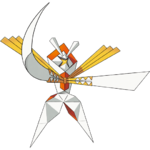
- Kartana as Saturn: Blade-like arms resemble a scythe, echoing Saturn's role as god of time and agriculture; Grass/Steel typing evokes cutting and cultivation
- Celesteela as Uranus: Rocket-like Pokémon, fitting for the god of the sky
- Guzzlord as Neptune: Crab-like pincers and a blue void within evoke the sea god; its Dark type and consuming nature also suggest a black hole
- Necrozma, a pseudo-Ultra Beast, is often associated with Pluto, the dwarf planet and god of the afterlife, as a creature that consumes light. Some fans assign Zygarde to Earth, as a Ground-type Pokémon that lives underground and serves as a guardian of ecosystems.
An alternative interpretation links the Ultra Beasts to the Seven Deadly Sins:
- Nihilego as Envy: Possesses and manipulates others
- Pheromosa as Lust: Focused on appearance and beauty
- Buzzwole as Pride: Boasts endlessly about its muscles
- Xurkitree as Greed: Absorbs electricity relentlessly
- Kartana as Wrath: Sharp blades and aggressive when provoked
- Celesteela as Sloth: Idle and plant-like
- Guzzlord as Gluttony: Consumes everything in its path
|

|

|

|
|

|

|
| Nihilego | Pheromosa | Buzzwole | Xurkitree | Kartana | Celesteela | Guzzlord |
| Mercury | Venus | Mars | Jupiter | Saturn | Uranus | Neptune |
| Envy | Lust | Pride | Greed | Wrath | Sloth | Gluttony |
Unova is a Kanto reboot
As many fans noticed, most Generation V Pokémon are actually reworked Pokémon from Generation I, fitting the narrative of being a soft reboot of the Pokémon series. They either follow the same archetype, are based on the same animal, have the same role in the game, or share the same type. Some interviews confirm that this is the case. However, most relations are not confirmed and are left to speculation.
Comparisons and similarities between lines:
- Serperior's line to Venusaur's as both are Grass-type starters. Also, Serperior is a snake like Ekans and Onix.
- Emboar's line to Charizard's as both are Fire-type starters. Also, Emboar is a pig like Primeape.
- Samurott's line to Blastoise's as both are Water starters and wear hard shells.
- Leavanny's line to Butterfree's as an amiable early Bug-type line with three stages. Its final stage, Leavanny, also resembles Scyther.
- Haxorus's line to Scyther as humanoid insectoid Pokémon with sharp blades on its body. It may also reference Rhydon, as its final species, Haxorus, was the first designed Generation V Pokémon.
- Excadrill's line to Sandslash as a dual-stage Ground type that digs through the ground and has a similar body shape.
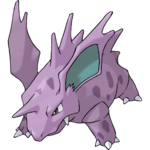
- Krookodile's line to Dugtrio as both create trapping holes in the sand. It also resembles Nidoqueen and Nidoking's lines, which are also three-stage lines with reptilian design and the Ground type.
- Golurk's line to Rhydon's as dual-stage Ground-type Pokémon with artificial elements, drill and cannon.
- Virizion, Terrakion, Cobalion, and Keldeo to Nidoqueen, Nidoking, Rhydon, and Kangaskhan, as the former group is a quartet of French musketeers that share the Fighting type and battle with horn swords, while the latter group are Japanese kaiju-based designs that share the Ground type and battle with head horns, except for Kangaskhan. Also, Virizion is feminine like Nidoqueen, Cobalion is masculine like Nidoking, and Keldeo is the child of the group, while Kangaskhan is a mother with a child.
- Zoroark's line to Ninetales as both are foxes with mystical powers. It also resembles Ditto with its ability to shapeshift.
- Reuniclus's line to Ditto as blob-like organisms resembling a single cell.
- Chandelure's line to Gengar's as both are three-stage Ghost-type lines.
- Ferrothorn's line to Exeggutor's as multi-headed seed-based Grass types. It also resembles the Electrode line as artificial sphere Pokémon with an affinity to magnetism.
- Amoonguss's line to Electrode's as fake Poké Ball items in the overworld. It also resembles Parasect due to being a mushroom.
- Galvantula's line to Parasect as a crawling dual-stage Bug type.
- Crustle's line to Kingler's as orange crustaceans. It also resembles Parasect with the shell substitute on their back.
- Swanna's line to Golduck's as a dual-stage duck-like Water type. It also resembles Gyarados's with the ugly duckling theme and additional Flying type.
- Eelektross's line to Gyarados's as a windsock-like water serpent with an open mouth and a first stage not being able to learn many moves.
- Whimsicott's line to Victreebel as a version-exclusive Grass type that evolves with an evolutionary stone.
- Druddigon to Arbok's line as reptilian Pokémon with a basilisk theme that learn Glare.
- Throh and Sawk to Hitmonlee and Hitmonchan as humanoid single-stage counterparts with the Fighting type that are based on martial arts. As both are based on oni, they also resemble Electabuzz and Magmar.
- Tornadus, Thundurus, and Landorus to Electabuzz, Magmar, and Jynx as a trio of initially single-stage Pokémon based on Japanese mythological creatures, notably oni.
- Gothitelle's line to Alakazam's as a three-stage humanoid Psychic type. It also resembles Jynx as a feminine witch Pokémon with prominent lips.
- Venipede's line to Weedle's as a poisonous early Bug-type line with three stages.
- Unfezant's line to Pidgeot's as a three-stage Normal/Flying early pigeon Pokémon.
- Watchog's line to Raticate's as a dual-stage early Normal-type rodent Pokémon.
- Alomomola to Lapras as a single-stage caring Water type.
- Seismitoad's line to Poliwrath's as a three-stage Water-type tadpole Pokémon.
- Reshiram, Zekrom, and Kyurem to Moltres, Zapdos, and Articuno as a trio of legendary Pokémon with Fire, Electric, and Ice types.
- Hydreigon's line to Dragonite's as a three-stage Dragon-type pseudo-legendary.
- Jellicent's line to Tentacruel's as a dual-stage Water-type jellyfish Pokémon.
- Bouffalant to Tauros as a single-stage Normal-type bovine Pokémon.
- Zebstrika's line to Rapidash's as dual-stage equine Pokémon that generate energy with Fire or Electric type.
- Klinklang's line to Magneton's as artificial robotic Steel-type Pokémon that multiply when they evolve.
- Swoobat's line to Golbat's as initially dual-stage bat Pokémon.
- Lilligant's line to Vileplume's as both are version-exclusive Grass types based on flowers. However, Lilligant resembles Bellossom, Vileplume's counterpart, due to its positive disposition and affinity to the Sun. What's interesting is that Lilligant was supposed to be a three-stage line like Vileplume according to some interviews.
- Beartic's line to Dewgong's as a two-stage Ice type based on an arctic animal that swims in the arctic sea.
- Garbodor's line to Muk's as a dual-stage amorphous Poison type.
- Emolga to Raichu's line as an Electric-type rodent with electric cheek pouches.
- Stunfisk to Onix as the flattest Pokémon and the tallest Pokémon in their generations.
- Simisage, Simisear, and Simipour's lines to Vaporeon, Jolteon, and Flareon's family as a trio of dual-stage elemental mammals that evolve with evolutionary stones and are gift Pokémon in their generation of introduction.
- Sigilyph to Porygon as an artificial bird-like Pokémon.
- Carracosta's line to Omastar's as Water/Rock-type extinct Pokémon revived from fossils with hard shells.
- Archeops's line to Aerodactyl as Rock/Flying-type extinct Pokémon revived from fossils based on bird-like dinosaurs.
- Heatmor to Lickitung as both are single-stage Pokémon whose design focuses on the tongue.
- Vanilluxe's line to Weezing's as both are levitating amalgams of heads that produce puffs of gas from their bodies.
- Audino to Chansey as both are initially single-stage pink Normal-type Pokémon with abilities to heal.
- Maractus to Tangela as initially single-stage Grass-type Pokémon.
- Basculin to Seaking's line as basic Water-type fish Pokémon.
- Cryogonal to Starmie's line as genderless geometrical star-like Pokémon with the ability to levitate.
- Meloetta to Mr. Mime as initially single-stage humanoid Psychic-type Pokémon with a performance theme.
- Victini to Mew as a small mythical single-stage Psychic type.
- Durant to Pinsir as single-stage Bug types with powerful pincers.
- Genesect to Mewtwo as both are single-stage legendary Pokémon with purple humanoid bodies and a story of being altered by an evil team to make them powerful weapons. It also resembles Kabutops as an arthropod Pokémon, with its high-speed flight configuration resembling Kabuto's body.
- Bisharp's line to Kabutops as both are humanoid Pokémon with arm blades and samurai kabuto helmets.
- Liepard's line to Persian's as both are dual-stage mean cat Pokémon.
- Darmanitan's line to Snorlax as big gorilla-like Pokémon that can activate a resting form in the overworld. It also resembles Persian as both are based on luck charms, the Daruma doll or Maneki-neko, or the Primeape line as both are aggressive monkeys.
- Mienshao's line to Primeape's as a dual-stage Fighting type.
- Scrafty's line to Marowak's as small bipedal lizard Pokémon that wear a mask. It also resembles the Primeape line as aggressive dual-stage Fighting-type Pokémon.
- Cofagrigus's line also to Marowak's as spooky mask-wearing Pokémon.
- Mandibuzz's line to Farfetch'd as bird Pokémon that hold a weapon, bone or leek.
- Braviary's line to Fearow's as large dual-stage Normal/Flying-type birds of prey.
- Sawsbuck's line to Dodrio's line as a Normal type that represents four weathers in comparison to Dodrio's heads that represent three emotions. However, according to some interviews Sawsbuck's line was designed specifically to represent the new weather system and may not be meant to represent Generation I Pokémon.
- Accelgor's line to Seadra's as dual-stage Pokémon that live in damp places and have beak-like mouths they use to shoot poisonous substances. Its previous stage, Shelmet, also resembles Shellder as a small soft Pokémon inside a shell.
- Escavalier's line to Cloyster's as invertebrate Pokémon that live inside shells and have big spears on their bodies. It also resembles Slowbro's line as it gains the shell of Shelmet, like Slowbro gains the shell of Shellder. However, there's also a scrapped Slowbro-like snail Pokémon in Generation V.
- Conkeldurr's line to Machamp's as three-stage humanoid Fighting types associated with construction sites that evolve after being traded.
- Gigalith's line to Golem's as three-stage Rock-type golem Pokémon that evolve after being traded.
- Musharna's line to Hypno's as dual-stage Psychic types based on tapirs with powers to eat dreams.
- Cinccino's line to Wigglytuff's as dual-stage mascot pink Pokémon that evolve with a Moon Stone.
- Beheeyem's line to Clefable as dual-stage alien Pokémon.
- Volcarona's line to Venomoth's as dual-stage Bug-type moth Pokémon. It also resembles Arcanine's line as a Fire type with legendary-like status.
- Stoutland's line to Arcanine's as fluffy dog Pokémon.
|
|
|
| ||||||||||||||||||||||||||||||||||||||||||||||||||||||||||||||||||||||||||||||||||||||||||||||||||||||||||||||||||||||||||||||||||||||||||||||||||||||||||||||||||||||||||||||||||||||||||||||||||||||||||||||||||||||||||||||||||||||||||||||||||||||||||||||||||||||||||||||||||||||||||||||||||||||||||||||||||||||||||||||||||||||||||||||||||||||||||||||||||||||||||||||||||||||||||||||||||||||||||||||||||||||||||||||||||||||||||||||||||||||||||||||||||||||||||||||||||||||||||||||||||||||||||||||||||||||||||


See also
- No categories associated with this article