

Game cartridge
A game cartridge, also simply referred to as a cartridge or cart, is a device in which many licenses to Pokémon games have been distributed. As of the Nintendo Switch 2, three different types of game cards exist: ROM cartridges (officially known as "Game Paks" or "game cards", depending on the system), Game-Key Cards, and Virtual Game Cards.
Types of game cartridges
ROM cartridge
A ROM cartridge is the most ubiquitous type of game card that most Pokémon games have been distributed throughout history. They generally contain all the game data, however since the release of the Nintendo 3DS, it has been possible for game developers to issue patches to games which occasionally require additional downloads onto the console's physical memory.
Throughout the Pokémon game series, all of the core series games have been stored on ROM cartridges, with many variances between them. Many side games have also been on cartridge but some have been for the GameCube and Wii (on discs, not cartridges). The ROM cartridges for the Game Boy, Game Boy Color, Game Boy Advance, and Nintendo 64 are officially called Game Paks, while Nintendo DS, Nintendo 3DS, Nintendo Switch, and Nintendo Switch 2 ROM cartridges are officially called game cards (sometimes formatted as "Game Card").
Game-Key Card
A Game-Key Card is a physical medium introduced alongside the Nintendo Switch 2 that looks identical to a regular game card. However, Game-Key Cards are distinguished with a Key icon in the top right of the card. Unlike regular Game Cards, they do not contain any game data and rather just hold a game activation key. When a Game-Key Card is inserted for the first time on a console, users are required to download the game to either the System Memory or a MicroSD Express card, once it is installed, the game will then behave like a standard Game Card game. While it may be installed like a digital game, the Game-Key Card is required to be inserted into the console after the game has been downloaded to enable the user to play the title. While Game-Key Cards can have benefits as games downloaded on a console's System Memory or an MicroSD Express card benefiting from faster load times compared to a Game Card, the introduction of Game-Key Cards has been controversial because they have completely replaced traditional ROM cartridges for the said titles and require the user to ensure they have the space to run the game as well as an internet connection to download the game, with some users arguing that making them download the Game Card's contents gives them the sense of a lack of ownership.
Pokémon Pokopia was the first Pokémon game to use a Game-Key Card. It was also the first Nintendo-published game announced to use this type of Game Card.
Virtual Game Card

A Virtual Game Card is the only type of Game Card which does not exist as a physical medium, and rather represents a digital license. It is possible to lend Virtual Game Cards for periods of up to 14 days, however this functionality requires both the receiver and the sender of the Game Card to be in the same Nintendo Account Family Group. Virtual Game Cards also allow for seamless license switching between consoles that share the same Nintendo Account. Unlike physical or Game-Key Cards, it is not possible to sell or trade Virtual Game Cards away to other players, as they are permanently tied to the Nintendo Account that purchased it.
Specifications
- Nintendo 64: 4.5 × 3 inches. (Measured from top of arch)
- Game Boy: 2.125 × 2.5 inches.
- Game Boy Color: 2.125 × 2.5 inches.
- Game Boy Advance: 2.125 × 1.375 inches.
- Nintendo DS: 1.25 × 1.375 inches.
- Nintendo 3DS: 1.25 × 1.375 inches. (Not counting anti-DS knob on side)
- Nintendo Switch: 1.25 × 0.8125 inches.
- Nintendo Switch 2: 1.25 × 0.8125 inches.
Core series
All core series games are contained on cartridges.
Generation I
All Generation I core series games were released on Game Boy cartridges. The Western version of Pokémon Yellow was released on a Game Boy cartridge, but is enhanced when played on a Game Boy Color.
Generation II
Pokémon Gold and Silver were released on Game Boy cartridges, but are enhanced when played on a Game Boy Color; they were marketed as Game Boy Color games that are backwards compatible with the Game Boy.
Pokémon Crystal was released on a Game Boy Color cartridge.
Generation III
All Generation III core series games were released on Game Boy Advance cartridges.
Generation IV
All Generation IV core series games were released on Nintendo DS cartridges.
Pokémon Diamond, Pearl, and Platinum were released on the dark gray-colored NTR-005 cartridges. Pokémon HeartGold and SoulSilver were released on the black-colored NTR-031 DS cartridges, which are for games that use Infrared connections, such as connecting to the Pokéwalker.
Generation V
All Generation V core series games were released on Nintendo DS cartridges, specifically the black-colored NTR-031 DS cartridges, due to being able to connect to each other through infrared. These games are also DSi-enhanced, bearing special DSi exclusive features such as video chat and region locking. Such features are also compatible on the Nintendo 3DS. Because of these features, these games all have a serial number that starts with TWL instead of NTR.
Generation VI
All Generation VI core series games were released on Nintendo 3DS cartridges.
Generation VII
Pokémon Sun and Moon, Ultra Sun and Ultra Moon were released on Nintendo 3DS cartridges.
Let's Go, Pikachu! and Let's Go, Eevee! were released on Nintendo Switch cartridges.
Generation VIII
All Generation VIII core series games were released on Nintendo Switch cartridges.
Pokémon Sword and Shield were also later released with their Expansion Pass included on the cartridge.
Generation IX
Pokémon Scarlet and Violet were released on Nintendo Switch cartridges.
While Scarlet and Violet also had releases with The Hidden Treasure of Area Zero, early revisions only contained version 2.0.1, meaning only The Teal Mask was playable without updating. Players with these revisions can update to version 3.0.0 or later, and will get access to The Indigo Disk for free.
Pokémon Legends: Z-A was released on both a Nintendo Switch cartridge and a Nintendo Switch 2 cartridge.
Non-handheld
Nintendo 64
The Nintendo 64 cartridge was seen in the Pokémon Stadium series, Hey You, Pikachu!, Super Smash Bros., Pokémon Snap, and Pokémon Puzzle League.
Irregular cartridges
Pokémon Pinball
Pokémon Pinball had a special Game Boy Color cartridge for a vibration feature.
Pokémon mini
The Pokémon mini was a special game system specifically for Pokémon. It had its own cartridges.
Gallery
Game Boy and Game Boy Color
-
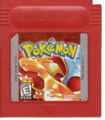 Pokémon Red cartridge
 -
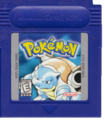 Pokémon Blue cartridge
 -
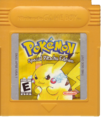 Pokémon Yellow cartridge
 -
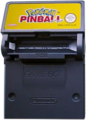 Pokémon Pinball cartridge without the battery cover
 -
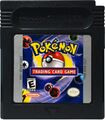 Pokémon Trading Card Game cartridge
 -
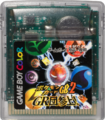 Pokémon Card GB2: Here Comes Team GR! cartridge
 -
 Pokémon Gold cartridge
 -
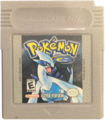 Pokémon Silver cartridge
 -
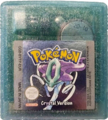 Pokémon Crystal cartridge


Nintendo 64
-
 Pokémon Snap cartridge
 -
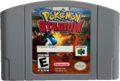 Pokémon Stadium cartridge
 -
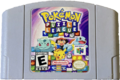 Pokémon Puzzle League cartridge
 -
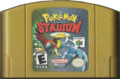 Pokémon Stadium 2 cartridge


Pokémon mini
-
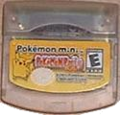 Pokémon Party mini cartridge

Game Boy Advance
-
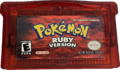 Pokémon Ruby cartridge
 -
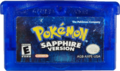 Pokémon Sapphire cartridge
 -
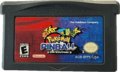 Pokémon Pinball: Ruby and Sapphire cartridge
 -
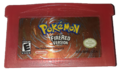 Pokémon FireRed cartridge
 -
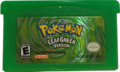 Pokémon LeafGreen cartridge
 -
 Pokémon Emerald cartridge
 -
 Pokémon Mystery Dungeon: Red Rescue Team cartridge


Nintendo DS
-
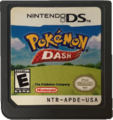 Pokémon Dash cartridge
 -
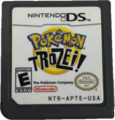 Pokémon Trozei cartridge
 -
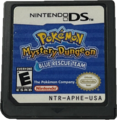 Pokémon Mystery Dungeon: Blue Rescue Team cartridge
 -
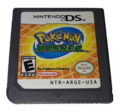 Pokémon Ranger cartridge
 -
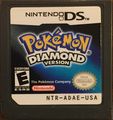 Pokémon Diamond cartridge
 -
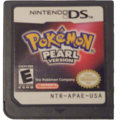 Pokémon Pearl cartridge
 -
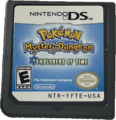 Pokémon Mystery Dungeon: Explorers of Time cartridge
 -
 Pokémon Mystery Dungeon: Explorers of Darkness cartridge
 -
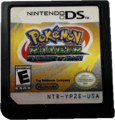 Pokémon Ranger: Shadows of Almia cartridge
 -
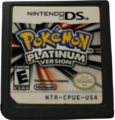 Pokémon Platinum cartridge
 -
 Pokémon Mystery Dungeon: Explorers of Sky cartridge
 -
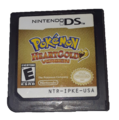 Pokémon HeartGold cartridge
 -
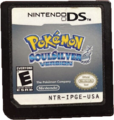 Pokémon SoulSilver cartridge
 -
 Pokémon Ranger: Guardian Signs cartridge
 -
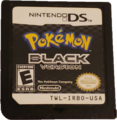 Pokémon Black cartridge
 -
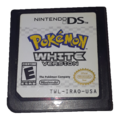 Pokémon White cartridge
 -
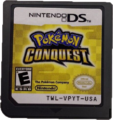 Pokémon Conquest cartridge
 -
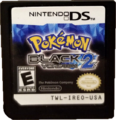 Pokémon Black 2 cartridge
 -
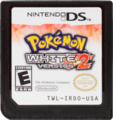 Pokémon White 2 cartridge


Nintendo 3DS
-
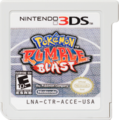 Pokémon Rumble Blast cartridge
 -
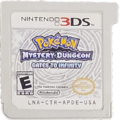 Pokémon Mystery Dungeon: Gates to Infinity cartridge
 -
 Pokémon X cartridge
 -
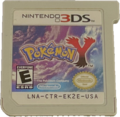 Pokémon Y cartridge
 -
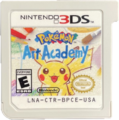 Pokémon Art Academy cartridge
 -
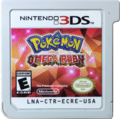 Pokémon Omega Ruby cartridge
 -
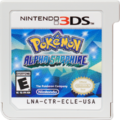 Pokémon Alpha Sapphire cartridge
 -
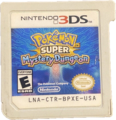 Pokémon Super Mystery Dungeon cartridge
 -
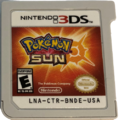 Pokémon Sun cartridge
 -
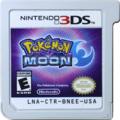 Pokémon Moon cartridge
 -
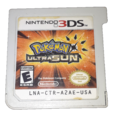 Pokémon Ultra Sun cartridge
 -
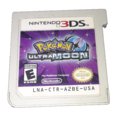 Pokémon Ultra Moon cartridge
 -
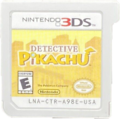 Detective Pikachu cartridge


Nintendo Switch

|
This section is incomplete. Please feel free to edit this section to add missing information and complete it. Reason: Shield + Expansion Pass, Scarlet/Violet + The Hidden Treasure of Area Zero, Detective Pikachu Returns |
-
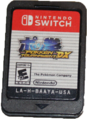 Pokkén Tournament DX cartridge
 -
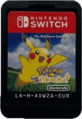 Pokémon Let's Go, Pikachu! cartridge
 -
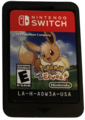 Pokémon Let's Go, Eevee! cartridge
 -
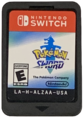 Pokémon Sword cartridge
 -
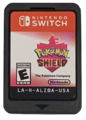 Pokémon Shield cartridge
 -
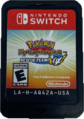 Pokémon Mystery Dungeon: Rescue Team DX cartridge
 -
 Pokémon Sword + Expansion Pass cartridge
 -
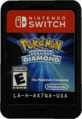 Pokémon Brilliant Diamond cartridge
 -
 Pokémon Shining Pearl cartridge
 -
 Pokémon Legends: Arceus cartridge
 -
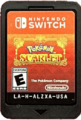 Pokémon Scarlet cartridge
 -
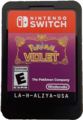 Pokémon Violet cartridge
 -
 Pokémon Legends: Z-A cartridge


Nintendo Switch 2
|
|
This section is incomplete. Please feel free to edit this section to add missing information and complete it. Reason: Pokémon Pokopia |
-
 Pokémon Legends: Z-A - Nintendo Switch 2 Edition cartridge


|
This game-related article is part of Project Games, a Bulbapedia project that aims to write comprehensive articles on the Pokémon games. |