

User talk:DzaiSheng
| Welcome to Bulbapedia, DzaiSheng! | |
By creating your account you are now able to edit pages, join discussions, and expand the community-driven Pokémon encyclopedia. Before you jump in, here are some ground rules:
| |
Thank you, and have a good time editing here! |

Regarding the Sylveon edit
Hi!
I think there's been some misunderstanding regarding your edit in Sylveon's Origin, so I'd like to talk about it to make sure we're on the same page. In your edit you mentioned something about merch? The Sylveon "ribbon-like feelers" the text is referring to are the scarves in Sylveon's very design (on its left ear and on its neck). It isn't related to any merch.
These ribbon-like feelers are a very important part of Sylveon, and what the theory proposes is that they may be based on the iconic clothing 仙女 xiānnǚ wear, which often include ribbons and a similar fluttering shawl (1)(2)(3). The Japanese 天女 tennyo (which came from the Chinese xiānnǚ) also carry a similar shawl, so it's not a foreign concept in Japan. However, the mention of xiānnǚ was preferred due to Sylveon's possible references to the moon rabbit, and consequently to Chang'e.
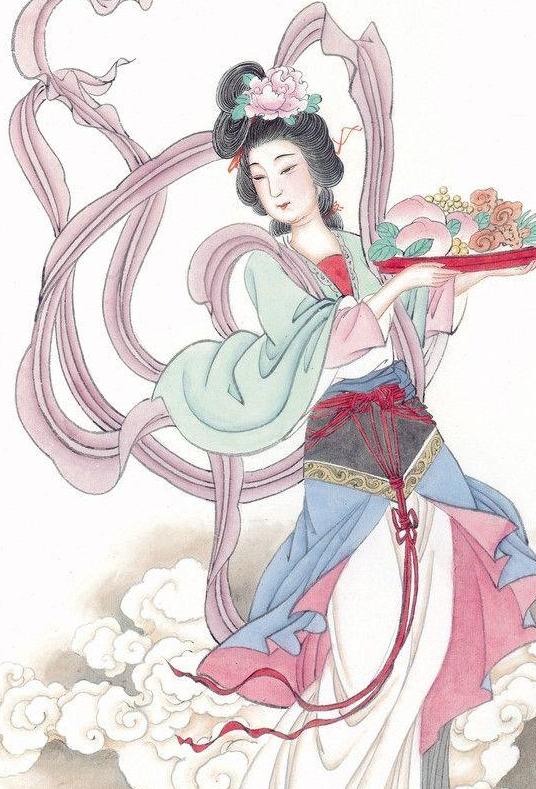


Moreover, from my understanding, in China, Western fairies have a significant overlap with 仙 xiān, as opposed to Japan that associates them with 妖精yōsei instead. The choice of pastel colors such as pink and light blue also seems to be fairly common choice in modern arts depicting Chang'e.
You seem to be a native Chinese user interested in cultural aspects, so please let me know if I got anything wrong or if there are some other nuances that make the proposed origin unlikely. I'd love to talk about it.